

Praying Like…
A sermon series drawing on the prayer lives of those who came before us
Study Guides
Praying like Abram
Genesis 15: 1-18 & Mark 10: 32-45
Week 1
12th April 2026
Abraham stood under a sky full of stars with empty hands.
God had promised him descendants too many to count, a land to call home, a future bigger than he could imagine—but here he was, growing old, still wandering, still childless, still waiting. You can almost hear the quiet frustration in his heart: “Lord… any updates?”
And instead of handing Abraham a neat timeline or a five-step plan, God gives him something better—Himself.
God asks for animals to be brought for sacrifice, and what follows feels strange to modern ears: animals cut in two, laid opposite each other, a covenant ceremony from the ancient world. Normally, two rulers would walk between the pieces together, saying, “If I break this promise, let this happen to me.” Or if one ruler was far stronger, the weaker one would walk through alone, taking responsibility.
But here, something astonishing happens.
God takes the weaker place.
Abraham, the old nomad with no land, no child, no power, stands and watches while God passes between the sacrifice alone. The Almighty binds Himself to Abraham. It is God saying, “If this covenant is broken, I will bear the cost.”
It is grace before Abraham has done anything to earn it.
And it points forward.
Centuries later, Jesus walks into Jerusalem, carrying that same covenant on His shoulders. The people had broken promise after promise. Again and again, God remained faithful while humanity failed. So God came Himself.
Not with thunder, but with dusty feet.
Not demanding service, but washing feet.
Not conquering with force, but loving with humility.
James and John still didn’t quite understand. They wanted glory—seats of honour, power, recognition. Jesus asks them, “Can you drink the cup I drink?”
They thought He meant victory.
He meant surrender.
Within days they would watch Him lift the cup at Passover: “This is my blood of the new covenant.”
They would see Him in Gethsemane, praying over that same cup of suffering.
They would watch the crowd choose a murderer over the innocent Son of God.
And finally, they would see Jesus lifted up on a cross, with one on His right and one on His left—the very places they had asked for.
That was glory.
Not power over people, but love poured out for them.
Jesus became the sacrifice. The heifer. The innocent one carrying guilt that wasn’t His, because no one else could. God kept the covenant by taking the punishment Himself.
And then Easter morning came.
The grave opened.
Love proved stronger than death.
The covenant wasn’t sealed in fear, but in resurrection life.
So prayer begins to look different.
To pray like Abraham is to come honestly with all the questions, worries, fears, and uncertainties of life—and instead of always getting detailed answers, hearing God say, “Look at Me. Trust Me.”
Not trust in outcomes.
Trust in character.
Not trust because life is easy.
Trust because God is good.
He asks nothing, because we cannot save ourselves.
And yet He asks everything, because once grace grips your heart, surrender becomes the only reasonable response.
Not because He wants less for us—but because He wants more. Real life. Deep life. Eternal life.
Sometimes prayer ends not with answers, but simply kneeling in silence, realising that in the end, it is just you and God—and somehow, that is enough.


3 Main Points
1. God invites trust before He gives explanation
Abraham wanted answers, but God gave him His character. Faith often begins not with clarity, but with trusting who God is.
2. Jesus is the fulfilment of the covenant
The sacrifice Abraham witnessed pointed forward to the cross, where Jesus took the full cost of human failure on Himself and sealed a new covenant in grace.
3. Real glory looks like surrender
James and John wanted power, but Jesus showed that true glory is humility, sacrifice, and love that serves others no matter the cost.
3 Questions to Challenge
1. Am I trusting God only when I understand what He is doing?
Or can I trust Him simply because of who He is?
2. Where am I still trying to control outcomes instead of surrendering them?
What would it look like to place that fully in God’s hands?
3. Do I define glory the way Jesus does?
Am I chasing recognition and comfort, or am I willing to walk the path of humility and costly love?
3 Prayer Points
1. Lord, help me trust Your heart
Even when I don’t understand the timing, the silence, or the waiting, teach me to trust who You are.
2. Jesus, thank You for taking my place
Help me never to lose wonder at the cross, where You carried what I could never carry.
3. Holy Spirit, teach me surrender
Lead me away from pride and self-protection, and help me walk the way of humility, courage, and love.
Praying like Joseph
Genesis 40 1-23 &1 Thessalonians 5-12-22
Week 2
19th April 2026
There’s something quietly beautiful about a life that looks ordinary on the surface—but underneath, it’s threaded with constant conversation.
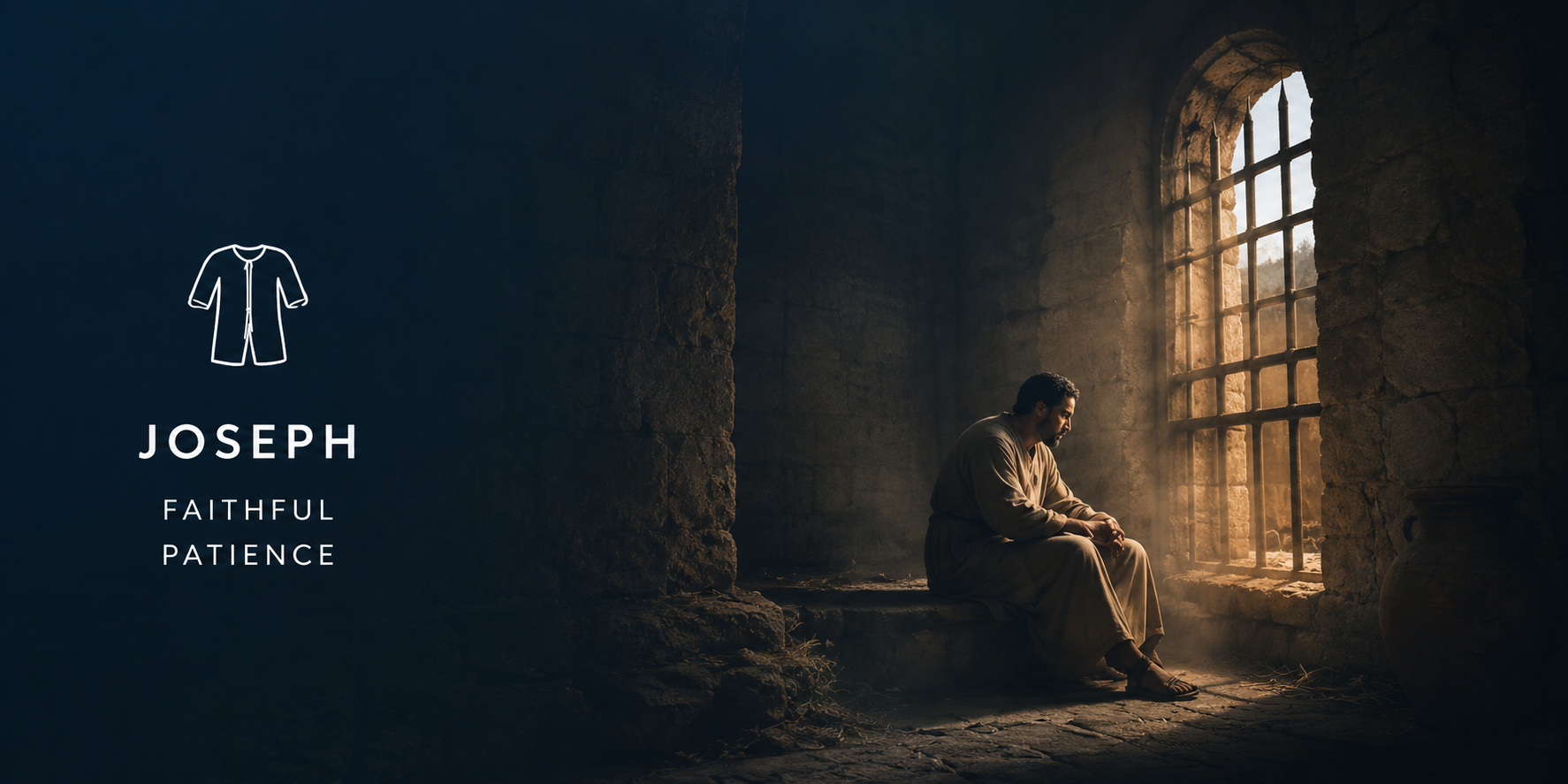
You find yourself in a prison cell with Joseph. Not the triumphant dreamer, not the coat-wearing favourite son—but the forgotten one. The one wrongly accused, overlooked, sitting in a place he never chose. And yet, there’s no dramatic prayer recorded. No poetic cries to heaven. No “O Lord…” moment. Just silence… at least on the page.
But it turns out, it’s not silence at all.
It’s the kind of prayer that doesn’t announce itself. The kind woven into noticing someone else’s sadness before your own. The kind that pauses before speaking and quietly leans on God for what to say. Joseph sees two men weighed down by their dreams—not the nighttime kind, but the kind that linger in your chest—and instead of rushing in with answers, he gently asks, “Why do you look so troubled?”
And somehow, in that moment, you realise: this is prayer.
Not the formal kind. Not the polished, rehearsed kind. But the kind that lives in the in-between spaces—between conversations, in passing thoughts, in small nudges that say, this isn’t just about you.
There’s a humility in Joseph. He doesn’t pretend to have the answers. He doesn’t perform wisdom. He simply points beyond himself—interpretations belong to God. And you get the sense that whatever he says next isn’t something he’s manufactured, but something received. Like he’s been quietly talking with God all along.
And then there’s that fragile, hopeful moment—when he dares to ask, remember me. Not a deal, not a bargain. Just a small reach for something more. And when nothing happens… when he’s forgotten… time stretches. Two long years.
It’s in that waiting where the ache settles in. Where prayers feel unanswered. Where nothing seems to shift.
But even there—especially there—God hasn’t stepped away.
Because prayer, it turns out, isn’t about controlling outcomes. It’s about staying close. It’s about whispering, I don’t know what I’m doing here… and trusting that somehow, that’s enough.
And then the story widens beyond Joseph. Into everyday life. Into awkward conversations, strained friendships, unexpected phone calls. Into those small, almost throwaway prayers—help me, I can’t do this, what do I say?
And slowly, you start to see it: God isn’t waiting for perfect words. He’s already there—in the car, in the tension, in the joy, in the ordinary. Even in the search for a parking space.
Not because the space matters. But because you do.
So prayer becomes less about starting and ending, and more about continuing. A thread that runs through everything. Through joy and frustration, clarity and confusion. Through moments when you feel strong, and moments when you’re barely holding on.
And somehow, in that ongoing, messy, honest connection—you find yourself not just asking for God to be with you…
…but realising you’ve been with Him all along.

Three Main Points
Prayer isn’t always spoken—it’s often lived.
Joseph’s life shows that prayer can be an ongoing, quiet dependence on God rather than formal words.God shapes what we give to others.
When we pause and lean on Him, our words carry more weight, wisdom, and grace than if we rely on ourselves.Faith means trusting without seeing the outcome.
Prayer doesn’t guarantee immediate results—but it anchors us in God through the waiting.
Three Questions to Challenge
Where in your daily life are you speaking or acting without first quietly turning to God?
Do you recognise the moments where people are looking to you for wisdom—and do you invite God into those moments?
How do you respond when your prayers seem unanswered or delayed—do you withdraw, or stay connected?
Three Prayer Points
Awareness:
Ask God to help you notice His presence in the everyday moments—not just the big ones.Dependence:
Pray for the habit of turning to God before speaking into situations, especially when others look to you for guidance.Trust:
Ask for deeper faith to keep praying and trusting, even when you can’t see results or understand the outcome.
Praying like Moses
Exodus 33:7-23 & Mark 9:2-8
Week 3
26th April 2026
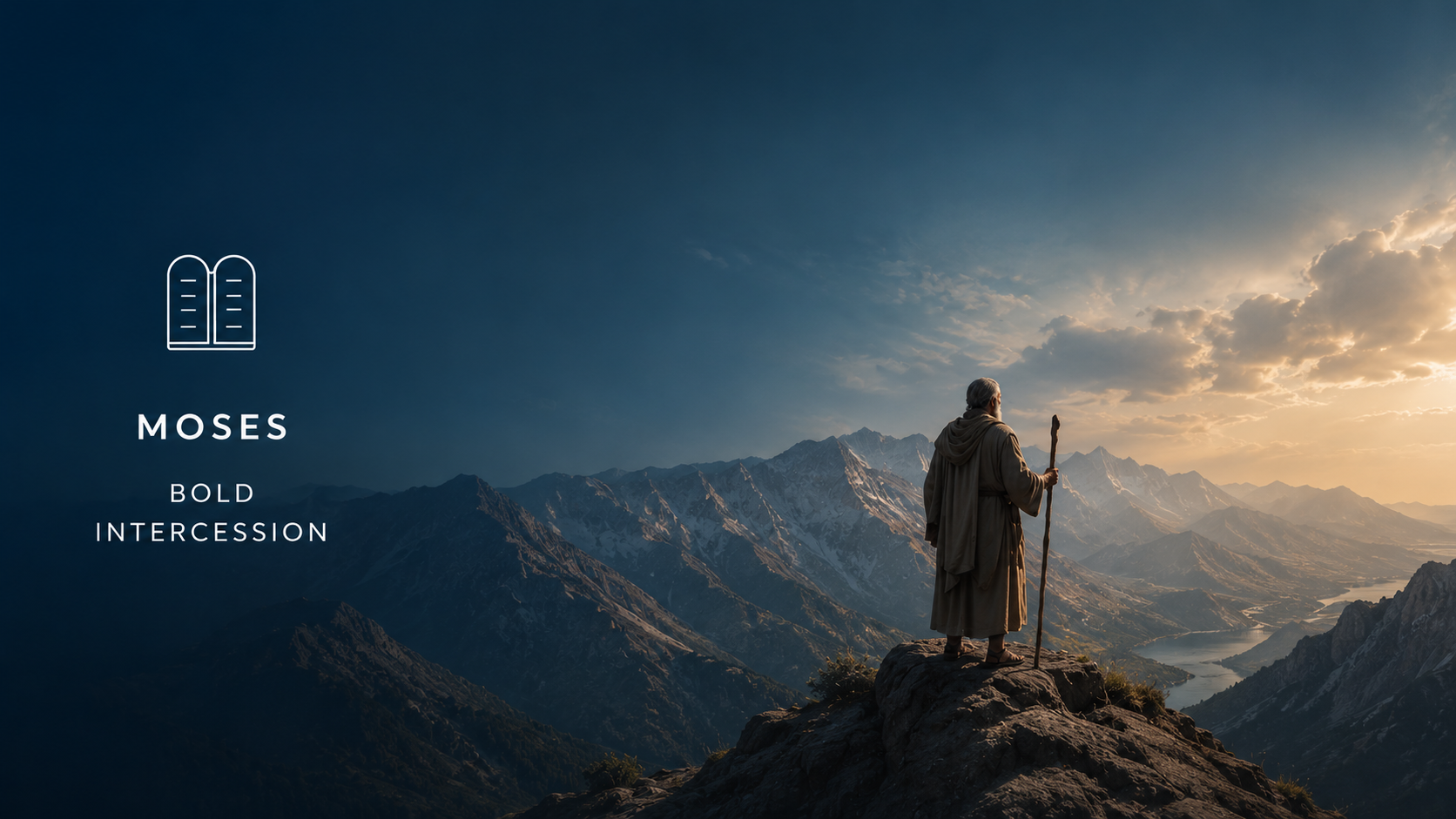
There’s something deeply moving about the way Moses keeps coming back to God.
Fresh from leading a grumbling, wandering people out of slavery, through deserts and miracles, he finds himself standing in the aftermath of betrayal. While he had been on the mountain with God, the people had already turned their hearts elsewhere, building a golden calf and calling it their god. It could have been the end of the story. God had every reason to walk away.
But Moses does something beautiful—he goes to the tent.
Away from the noise, away from the complaints, away from the chaos of the camp, there was a simple place called the Tent of Meeting. It wasn’t grand. It wasn’t permanent. It was simply a space where Moses met with God. A place of friendship. A place where heaven and earth seemed to draw close.
And there, we’re told, Moses spoke with God as one speaks with a friend.
Not polished religion. Not distant ritual. Friendship.
It reminds us that prayer is not first about performance—it’s about presence. It’s about creating space. Sometimes that looks like a quiet room. Sometimes it’s a walk, a car journey, a garden bench, or even a busy mother pulling her apron over her head for five minutes of peace. The place matters less than the intention: making room for God.
Because what Moses wanted most wasn’t just answers—it was God Himself.
He wanted more than commandments on stone tablets. He wanted to know God’s heart. “Show me your glory,” he asks. Show me who You really are.
And God responds, not with a lecture, but with presence.
Moses learns that God is not just powerful, but good. Merciful. Compassionate. Holy. Near.
Years later, on another mountain, Moses appears again—this time standing beside Jesus as Christ is transfigured in blazing glory. Suddenly everything becomes clearer. The glory Moses longed to see is standing right there in front of him. Jesus is not simply pointing toward God—He is the full revelation of God. The mercy, the compassion, the holiness, the love—it all has a face.
And this changes everything.
Because now prayer is not about visiting a tent somewhere far off. Jesus Himself is the meeting place. Through the Holy Spirit, God’s presence comes with us—into kitchens and offices, school gates and supermarkets, family chaos and quiet grief.
Moses refused to move without God. “If your presence does not go with us, do not send us.”
That becomes the cry of every heart that has truly met Him.
Not just bless me. Not just help me. Come with me.
Because the real gift of prayer is not getting what we asked for.
It is getting God.

3 Main Points
1. Make space for God
Moses had a tent—a deliberate place to meet with God. Prayer needs intention. We need spaces where we stop, step away from distraction, and simply meet with Jesus.
2. Seek God’s presence, not just His provision
Moses wanted more than guidance; he wanted God Himself. Prayer is not just asking for things, but learning to recognise and enjoy the presence of the Holy Spirit.
3. Don’t go anywhere without Him
Moses refused to move forward without God’s presence. Real faith means inviting Jesus into everyday life—not leaving Him behind after our quiet time, but walking with Him everywhere.
3 Questions to Challenge
1. Where is my “tent of meeting”?
Have I created intentional space to be alone with God, or am I trying to fit prayer into leftover moments?
2. Am I seeking God, or just His help?
When I pray, do I mainly want solutions, or do I genuinely long to know Him more deeply?
3. Would people notice if God’s presence was with me?
Does my daily life reflect someone walking closely with Jesus—in my home, work, conversations, and decisions?
3 Prayer Points
1. Lord, teach me to make space for You
Help me to slow down, step away from distraction, and prioritise time in Your presence.
2. Holy Spirit, reveal Jesus to me
Let me know You not just in theory, but personally—show me more of Your goodness, mercy, and glory.
3. Father, let Your presence go with me
In my family, my work, my friendships, and every ordinary place I go—help me carry Your peace, love, and light.

Week 4
3rd May 2026
Praying like Joshua
Joshua 7: 1-9 & 10: 12-14 & Matthew 6: 1-8
All of us have areas in life where we quietly carry questions, frustrations, or longings—situations that feel stuck, beyond our control, or just plain impossible. It might be something at work, something in our relationships, or something going on deep inside us. And in those places, prayer can sometimes feel difficult—do we dare to ask God for something big, or do we hold back?
This is where Joshua’s story speaks so powerfully into our lives. It shows us that prayer isn’t meant to be timid or surface-level. We’re invited into something much deeper—prayer that is both boldly expectant and deeply honest.
Joshua had seen God do incredible things. He’d watched waters part, walls fall, and victories come in ways that made no human sense. So naturally, his instinct was to pray with confidence—to ask God to move, and to expect that He would. But then comes a moment where everything falls apart. Israel is defeated, and Joshua is shaken. He doesn’t understand what’s gone wrong, and he brings that confusion straight to God.
There’s something refreshing about that. No pretending, no polished words—just raw honesty. But the turning point comes when God reveals that the issue isn’t His absence, but the people’s disobedience. Something beneath the surface is out of alignment, and it’s affecting everything.
And that’s where things get uncomfortable—but also deeply important for us. It raises the question: when we come to God in prayer, are we only focused on what we want Him to do, or are we willing to let Him search what’s going on in us?
Once things are put right, Joshua leads the people back to a place of commitment and worship. And from there, we see bold prayer again—but this time it flows from a place of alignment with God’s heart. When Joshua asks for the sun to stand still, it’s not about his reputation or comfort—it’s about God’s purposes being fulfilled and His name being honoured.
That combination is what really stands out: boldness and integrity together. Not one without the other. Boldness without integrity becomes self-serving. Integrity without boldness becomes passive. But when the two come together—when our hearts are aligned with God and we trust Him enough to ask for the impossible—that’s when prayer becomes powerful.
So the invitation for us is to come back to that place: to pray honestly, to pray courageously, and to keep asking God not just to change our circumstances, but to shape our hearts. Because ultimately, the goal isn’t that we look good or get what we want—it’s that God is glorified, and that through our lives, others come to see Him more clearly.

Three Main Points
1. Pray boldly—even for the impossible
God invites big, courageous prayers. Nothing is off-limits if it’s within His will.
2. Check your heart—integrity matters
We want to seek God’s will for our lives and struggles. Are we asking for God’s will to be done, rather than our own?
3. God’s glory must be the goal
The purpose of prayer isn’t to make life easier or make us look good—but to point people to Him.
Three Challenging Questions
Where in my life have I stopped praying boldly because things didn’t go as expected?
When I pray, am I more focused on my outcome or God’s glory?
Is there anything in my life—attitudes, habits, compromises—that might be getting in the way of my relationship with God?
Three Prayer Points
For boldness:
Ask for courage to pray big prayers again, trusting that God is able to do the impossible.For a pure heart:
Invite God to search and align your motives, removing anything that doesn’t reflect Him.For God’s glory:
Pray that your life, your answers to prayer, and your church would clearly point people to Jesus—not to yourself.